
Hexagenia Limbata
It's a Mayfly, or Shadfly, or whatever.

Five days on the rapids in July would normally be a gift from the heavens above, and trust me when I say that it is, but it’s also something that requires a long and tedious task - spinning up some Hex fly nymphs.
And dry flies, too. But they’re not nearly as important.
I learned how important this task is on my last trip to the rapids when I stupidly decided that having these wasn’t all that important in the pursuit of the giant resident rainbow trout that call the place home. I don’t exactly recall how it happened, but I do remember that it involved this daft notion that the fish would hit anything that gave the loose impression of a large mayfly nymph. This proved to not be the case at all, and it ended up leaving two anglers standing on the berm, watching fish rise everywhere to crippled nymphs and massive emergers.
Don’t get me wrong, it was a hell of a sight. Dozens upon dozens of fish, most of which were over sixteen inches and a few that were well over twenty five inches, eating all these massacred bugs off of the surface without so much as another soul around is enough to keep a guy like me standing quietly, searching for the perfect fish to make what you really hope ends being the perfect cast. By the time that darkness envelopes the place, an angler might dance loosely with the thought of sleeping out here on the concrete shore.
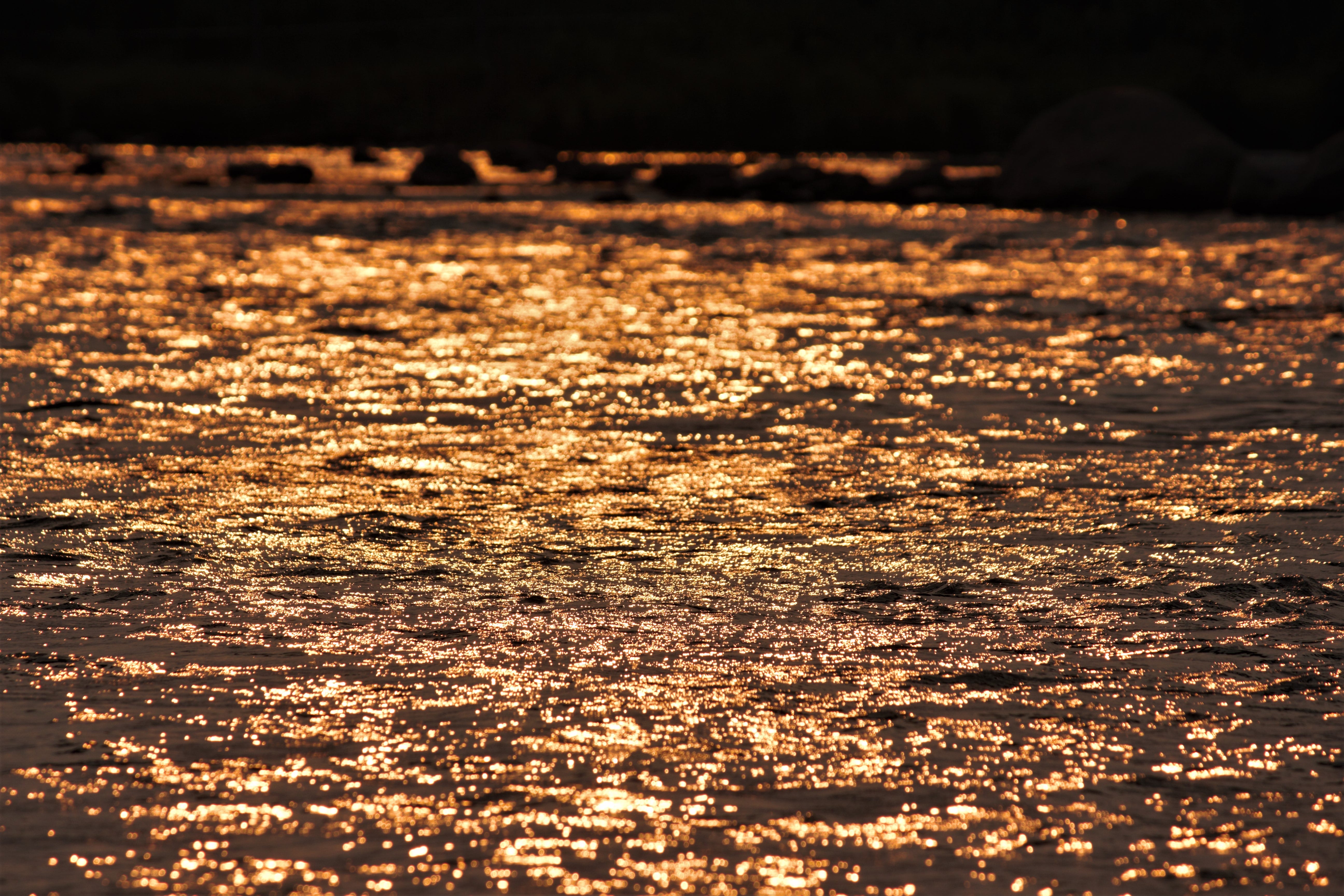
Somewhere north of here is a fire eating up miles of forest, and it gives the evening sky an apocalyptic feel about it, though it wasn’t like this all day. Earlier the bluebird skies and a stiff west wind made fishing, and even casting a fly rod, difficult enough. There’s a point in the afternoon when everything seems pointless - the fish aren’t showing themselves and no one out there could blame them, and frankly a person can only cook themselves in the sun for so long before madness ensues - but the evening still has plenty of promise, so I hang tight and keep an eye open.
The flies themselves will show up, that I can be certain of. The hatch is a messy, fucked up type where the gates of the dam chew the nymphs and adults alike to a pulp before sending them downriver throughout the water column. I’ve seen the massive trout piling up a few meters down from the gates where the fed in ten feet of water. White blips of gums opening and closing on the poor crippled bastards, barely visible if you didn’t have a good set of eyes hidden behind the right tint of polarized sunglasses.
Of course none of this will make sense if you don’t have a basic knowledge of things like fly fishing, mayflies, and Sault Ste Marie in Ontario, but what will is the general pursuit of adventure; of chasing after something that not too many seem to be thinking about, much less making a concerted effort to catch.
So forgive me, because it’s only going to get more descriptive, and probably more strange.
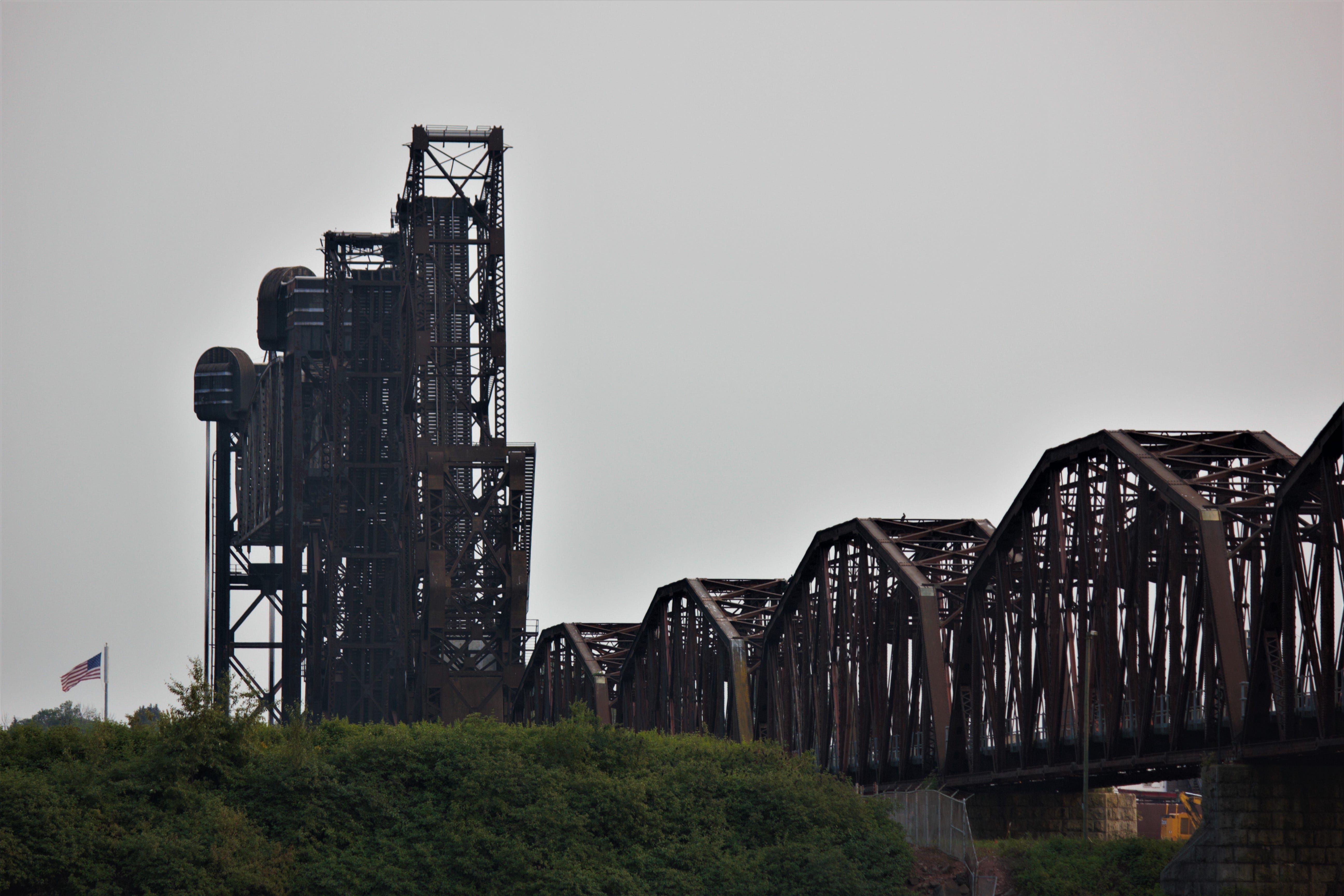
Ya, sure, Hemingway did write about this place, and said something to the affect that it was the best rainbow trout fishing in the world, but he wasn’t out here looking for the resident fish, and if he was, I doubt he was running a fifteen foot tapered leader with a tandem rig of heavily weighted nymphs being chucked perilously by a fast action graphite fly rod, and it is entirely likely that he had more alcohol in his system by this hour in the evening than I do currently. If a wind was coming off of Lake Superior, I can bet you that Hemingway was probably thinking about Bimini, or Africa, or a foreign battleground somewhere far away.
He wasn’t thinking about mayflies, or hatches, or whether the trout were keying in on nymphs, duns, or both. That can happen up here.
When the fish are up on the surface, feeding that is, the waters’ surface can look as though a light rain has begun to fall. That’s how it happened two nights prior when the lake calmed down, the hatch started up, and the trout were looking upward for easy meals. They’d rise, sip one of the giant mayflies off of the surface, and the tips of their tails and dorsal fins would cut the surface in tandem, and if someone standing out there was really, really, really watching carefully, they could tell which of these fish was bigger based on the size of the gap between the two fins.
I’d started work on this adventure a year prior, which mostly involves investing a couple hundred dollars in materials for tying flies, and then the time it takes to actually make them. Buying the flies would be more time efficient, but way less fun, and fun is ultimately what this is all about. There’s a very loose mathematical equation used to figure out just how many flies any fly angler will need for any trip. Essentially you take the number of potential bodies of water you might fish on, the number of people in your party that could potentially need flies, then add them together. The sum of that is then multiplied by the number of fish you hope to catch, the sum of that is then multiplied by the number of patterns you’ll need, and then just for good measure you add the number of hours that you plan to fish to that. Whatever the end sum is, multiply that by two. That’s how many flies you’ll need.
And, just for good measure, make sure to tie some that you probably won’t need, but will feel better having with you, you know, just in case…
At some point you have to pick a fish, and by you, I mean me. Setting yourself up for a cast will revolve around which fish you choose to cast to and where exactly it is in reference to the current, wind, structure, and so on. You’ll fuck things up every now and again - or sometimes more - but you’ll also nail it, which feels good.
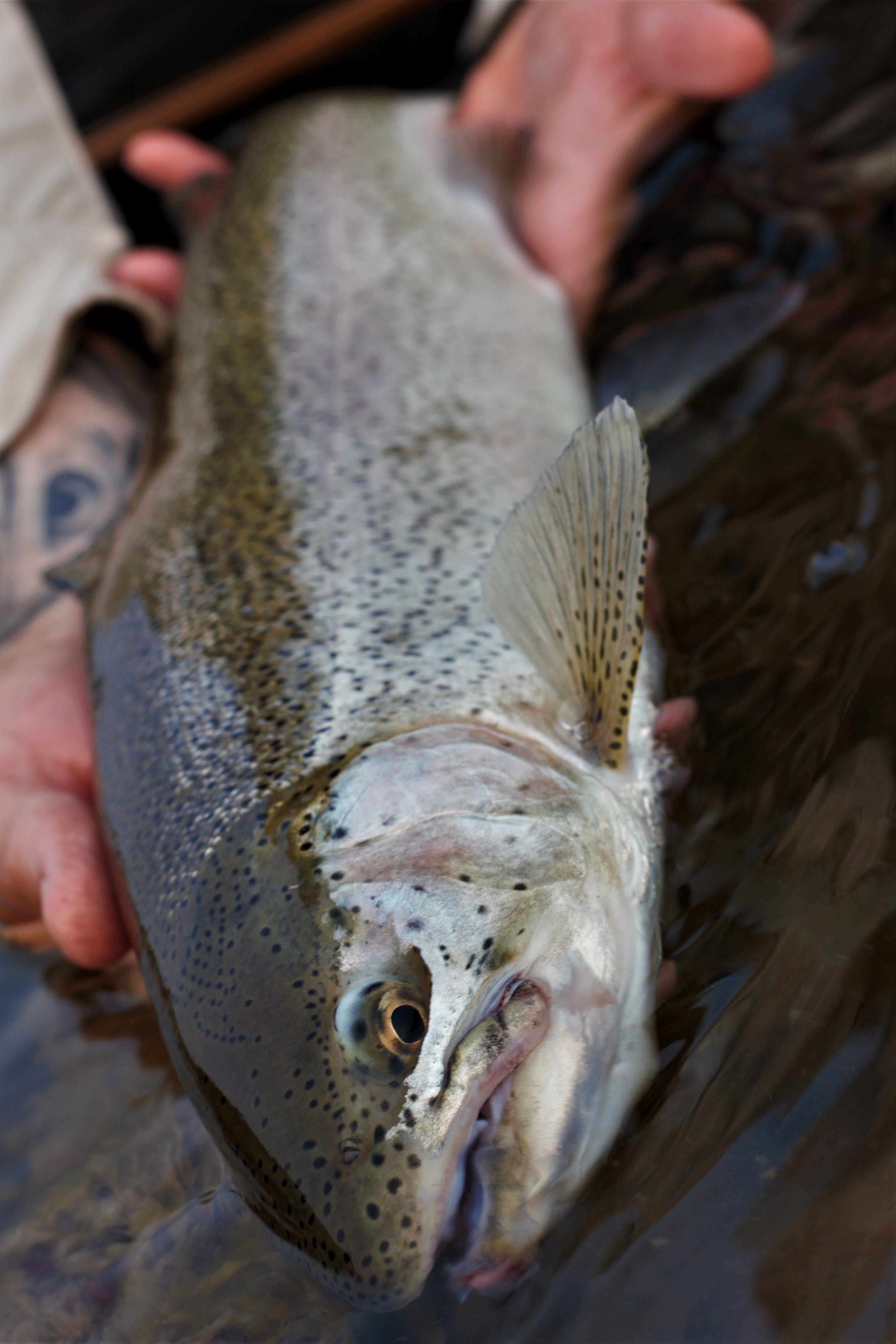
The fish, some of which will be large, go absolutely ballistic. They peel line and run all over the place, and depending on the rod you’ve chosen (in this case, a fast action 6 weight G-Loomis GLX), you’ll either be able to fight the fish into some sort of state of exhaustion, or you’ll stand there like an idiot, completely helpless. Again, by you, I mean me.
These mayflies that I was talking about earlier - the Hexagenia Limbata, or “Hex” for short - are a meaty insect and it’s truly no wonder why the trout go ape shit for them. So much so that they pass up, or at least is seems like they do, chances to eat other aquatic insects that appear to be all over the place. Last night was a prime example; we were out here, the sun had gone down, and these black caddis were fluttering around in the thousands, drifting across the surface and getting into our ear canals, and despite my best efforts to get a fish to smack various versions of them, they only wanted the Hex.
It occurred to me that this sort of shit isn’t for everyone, and based on what I’m seeing tonight, it’s actually only for me. Most of the other fly anglers out here were decked out with double handed rods form fitted for swinging flies for the copious numbers of Atlantic Salmon that the U.S side of the rapids pumps into the water. These fish are complete maniacs, and they love them a good Hex nymph lunch, too. But that lot cleared out shortly before 7:00, leaving this rusty old river between two giants all to yours truly.
The hatch doesn’t just “start” in the way that you might think it would. It’s a gradual thing, ya know? In fact, it reminds me a lot of duck hunting early in the autumn season, when the weather is still just a little too warm to keep the birds moving, and once legal light comes and goes in the evening, that’s when the biggest numbers of waterfowl move back into the marsh to roost for the night. The heaviest part of the hatch begins right when an angler needs to start thinking about making the hike back across the river, but there’s just enough of the good stuff prior to get your rocks off.
Those Atlantic Salmon nuts cleared out and the wildlife started to show up again. Herons mostly, with the off merganser touching down and feeding on baitfish up near the gates. There’s mallards in the back channels, green frogs, kingfishers, beavers, things like that. They pay no mind to me.
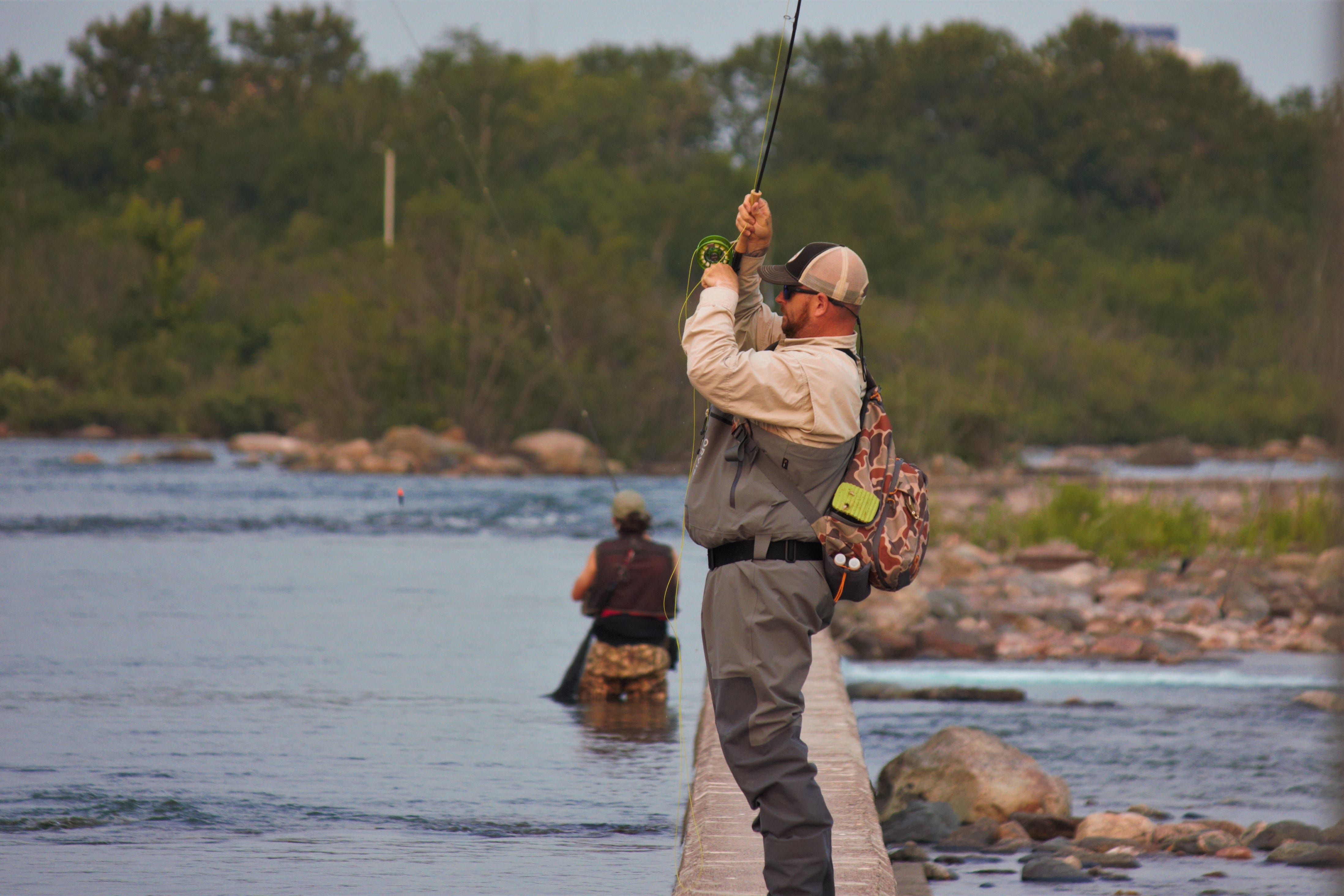
It seems outlandish that I’d drive ten hours for this sort of thing but when you consider that we don’t have anything quite like this where I’m from, and deep in me is a fledgling trout fisherman that needs a fix every so often, it begins to make more sense. I’ll spend a year thinking about one place or another, brainstorming how and when I’ll either make an inaugural visit or a well deserved return trip, and pray to any deity who might listen that I made some notes from my last trip there. From there, it’s just a matter of time before the preparations begin to take place. Money is spent, gear is established, and a plan is formed. That same plan might go completely sideways later on, but that’s what the laundry list of contingency plans are for…
On the outside, being a closet trout angler doesn’t appear harmless, at least not toward others, but if it gets into your blood, you could be completely screwed. Especially if you have an addictive personality and suffer from an chronic case of impulsive behaviour. If so, you’re probably a goner Financially you’ll be in ruin, unless you are rich, which I am not. Or if you are smart, which I am also not. If I was, I wouldn’t be on the river tonight, I’d be home being a good spouse to the woman that is back on the homestead running the show and no doubt cursing me and my dumb, broke, impulsiveness, and the trout that always tear me away from her.
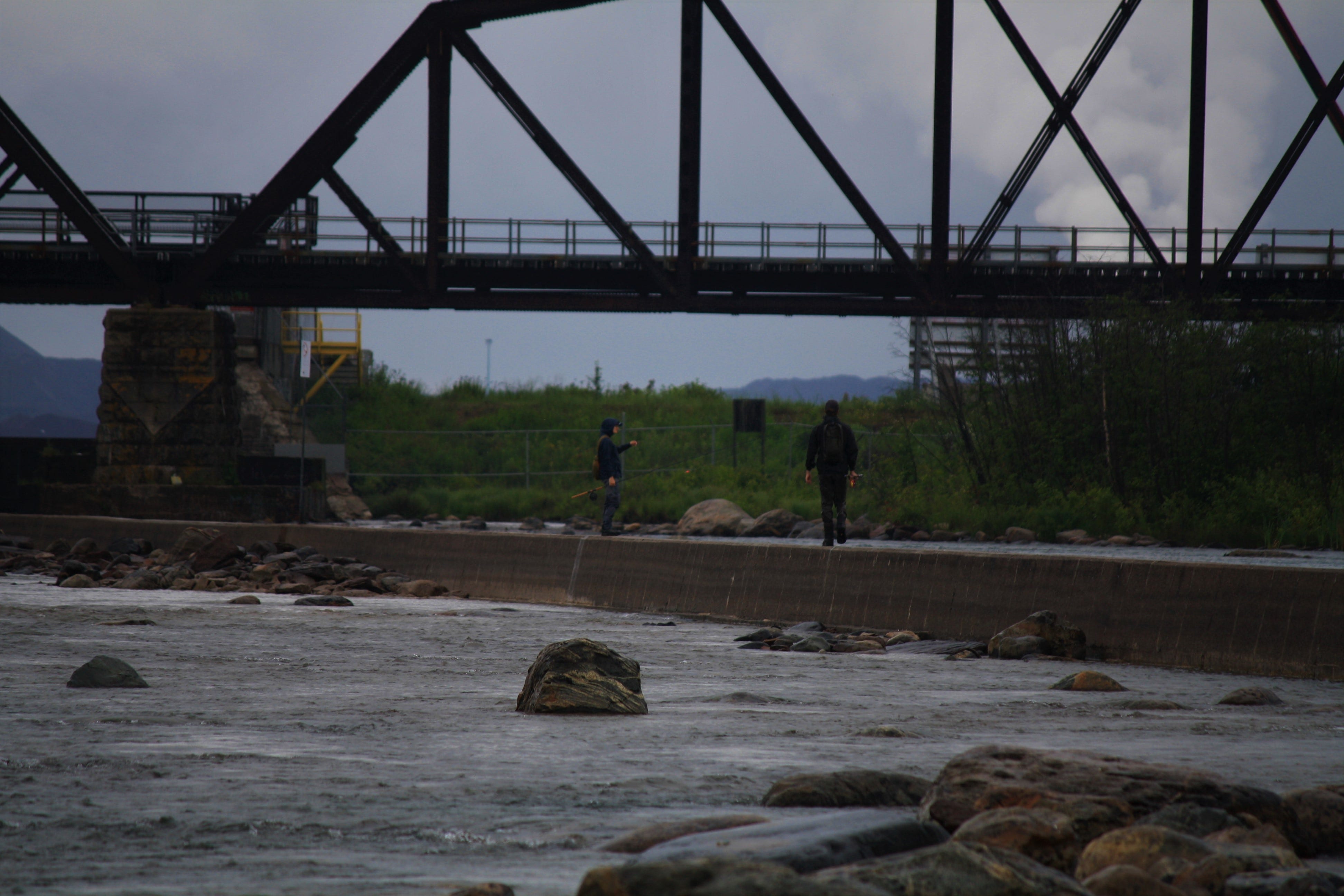
Okay, that might be a stretch sports fans, but the fact still remains that while some folks have partners who worry about them cheating or leaving, mine no doubt worries about me discovering another incredible fishery that will lead to untold miles on the Jeep and impromptu trips in the middle of the week that come seemingly out of nowhere.
But damnit, isn’t that the price we pay for world class trout fishing and the subtle art of getting to put yourself in the position to actually catch one? Hell, maybe even two if the Hex hatch is coming off and you find yourself ten hours north of where you live, a six weight fast action fly rod in your hand under an apocalyptic sky shortly before sundown and shortly before the fish should start rising. Trout are the damnedest thing when you try to understand them, because they’re certainly not in there trying to understand you, and they won’t spend a penny trying to connect with you, either.
Now I’m getting off topic entirely, so lets put this train back on the rails.
Let’s say the fish start rising, I’ve chosen one, and the best method to getting a fly into this particular fishes’ feeding lane is to cast at a forty five degree angle from upstream, which will lay out the fly (a giant, Hex version, of a pattern called a Rusty Spinner) and so long as I’ve done things correctly, the fish will, at the very least, have a look at the fly. If it eats it, so much the better.
So, that’s how the evening ends up. Things go well, I hook a couple of fish that, by some miracle, I am able to land. One is built like a football while the other looks more like a Great Lakes Steelhead than a resident rainbow trout. The evening turns to night, and the bugs get real good, then get real bad. The headlamp comes on - an aid to cross the river where it is the most shallow - and fifteen minutes later I’m in the parking lot swatting mosquitoes, loading up and thinking about a pound of wings a few miles up the road where no one knows me.